Taking Care of Baby Bird Fell Out of Nest
In the third grade, my instructor found what she thought was an abandoned baby bird on the schoolhouse grounds. She asked if someone in the form would intendance for it, and days afterward, the European Starling I named Bluego (for a reason I wish I remembered) was living in a cardboard box in my sleeping accommodation, padded with imitation spider web left over from Halloween. Every bit a child, I was thrilled to be on my way toward becoming a wild animals rescuer, but years later I wondered if it was the right thing to do.
As I've learned, information technology probably wasn't. Like the vast bulk of baby birds that people encounter, Bluego was a weeks-one-time fledgling—not a newly born nestling. And this distinction is critical, wild fauna rehabbers say, because most fledglings don't need to be rescued. "Eighty percent of baby birds that come up in have basically simply been kidnapped," says Melanie Furr, education managing director at the Atlanta Audubon Guild and a licensed volunteer at Atlanta Wild Animal Rescue Effort. "They need to be taken back."
Wandering from the nest is exactly what fledglings—which are just learning to fly—are supposed to practise, she says. It's a normal role of a bird'due south development, and though these chicks might appear abased, they're probable under surveillance by their parents nearby. Of course, at that place is a take a chance that they could be injured, sick, or in danger, so at that place are some cases where a fledgling might require aid.
Nestlings, on the other hand, are about always in need of rescue. Whether they vicious or got pushed from their nest, they're " non ready to become off into the world," s ays Rita McMahon, Co-Founder and Managing director of the Wild Bird Fund, a nonprofit fauna rehab center in New York . How to help them, though, can vary.
To know when you should intervene—and how you can help if needed—ask yourself the questions below.
Is the bird a nestling or fledgling?
When you lot come beyond a rogue baby, commencement determine its age, McMahon says.And there's one obvious sign: feathers. While fledglings are larger and covered almost completely in downwards and feathers, nestlings are small and typically naked—or with just a few fluffs. In other words, one looks like an bad-mannered young bird, and the other kind of looks similar a pinkish little alien. You can as well distinguish age by motility: fledglings tin can hop, whereas nestlings might simply drag themselves on the ground by their bare wings.
If you've found ahealthy fledgling: "Walk away from the bird," McMahon says. Rescuing healthy fledglings is not but unnecessary, but it can be detrimental to their evolution. When raised by paw, she says, babies might confuse humans as their parents (not unlike the geese in the pic Fly Away Domicile). If that happens,"they don't know how to be a bird," McMahon says.
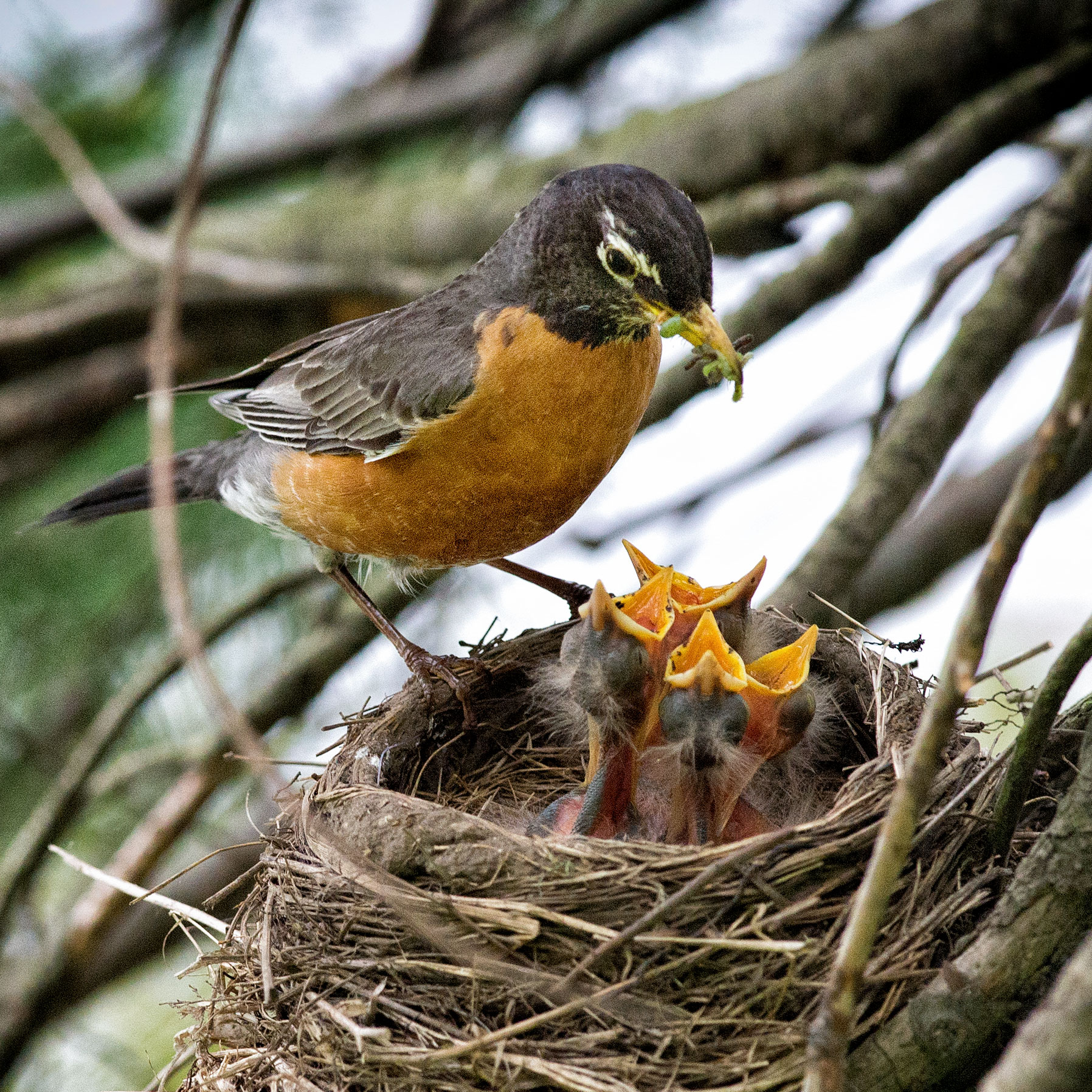
If y'all've found a nestling: Aid. Start, look for the babe'due south nest in the nearby bushes or trees; if y'all find information technology, simply put the chick back and the parents will resume intendance. And don't worry about touching the bird: The idea that once you've touched a baby bird it will be rejected is not true, says Susan Elbin, director of conservation and science at New York City Audubon."Birds have a sense of smell, simply it's not very well developed," Elbin says. "They're not going to abandon their chick."
If the nest is nowhere to be institute or simply out of reach, just craft one yourself, Furr says. Find a small container, like a strawberry basket, and load it with a scrap of T-shirt or some straw—annihilation dry will do. Gently identify the youngling within, and affix the bogus nest in a tree close to where the bird was establish. "You want to become it equally high upwardly every bit possible," Furr says.
Once y'all've returned the bird to a nest—whether real or homemade—continue an eye out for the parents. If they don't return inside an hour,phone call a wild fauna rehabilitation eye.
Is the bird sick, wounded, or at risk?
Whether you lot come across a fledgling or nestling, information technology's of import to assess whether the bird needs medical help or is in danger.
Often, it's clear when the bird is in demand of urgent intendance—if the cat dragged it in, that'south a sure sign. Other times the signals are more subtle: Though information technology's a fledgling, information technology can't stand up or hop normally. The feathers might be wet though information technology's not raining, indicating discharge or an affliction that inhibits the product of preening oils. Or possibly it's surrounded by flies, which might signal an open wound.
During hot summer months, dehydration is also common, McMahon says. "Their belly is like a prune, wrinkled, shriveled and suck in," she says.
If you think you've found a sick or wounded fledgling or nestling, call a rehabber, state wild animals bureau, or veterinarian immediately. If information technology'due south later on hours, take the babe to a condom and warm location, Furr says, such equally a closed box with air holes and a heating pad beneath it. And even if your parental instincts kicking in, don't feed the baby, she says.
"People take skilful intentions and call up the baby bird is going to starve," Furr says. "But a lot of times it ends up doing more harm than skillful."
At Atlanta Wild Brute Rescue Try, she'due south seen babies with food in their lungs from improper feeding. Simply if the chick is just kept in a dark place, its metabolism volition irksome down, she says, leaving plenty of time for professional rehabbers to swoop in for a rescue.
You lot might also come across a fledgling or nestling that's not injured, but at risk—such as from a prowling true cat or human feet. Hither's an like shooting fish in a barrel ready: "Put it in a bush-league," Elbin says. In other words, hide the chick or put it in a place that's out of reach or out of the manner.
And subsequently all this, if you lot're still not sure if the bird needs help or what to do, earlier doing anything, call your local wild fauna rehabilitation center. Helping animals—and preventing fledgling kidnappings—is what they do.
***
Audubon is a nonprofit dedicated to protecting birds and the places they need. You can back up our conservation work by donating today.
Source: https://www.audubon.org/news/when-you-should-and-should-not-rescue-baby-birds#:~:text=If%20you%20think%20you've,a%20heating%20pad%20beneath%20it.

Postar um comentário for "Taking Care of Baby Bird Fell Out of Nest"